How water companies are working together to ensure there is enough water for the future.
What is a regional water resources plan?
A regional water resources plans is an assessment and a plan for the region’s water needs, reflecting growth, climate change and the environment. The plans are created through a collaboration between water companies and other large water users
The plans are designed to deliver:
More resilience to drought
Greater environmental improvement
Long-term and sustained reductions in the volume of water each of us uses every day
Leakage reductions of 50% by 2050.
In addition, they have to show how each region will make sure there is enough water to go round in the future. This could include:
Building new reservoirs or desalination plants
Implementing water re-use or recycling schemes
Developing and sharing water supplies with other sectors, such as agriculture and energy
Moving water from areas where it is plentiful to areas where it is in short supply.
The plans are devised by five regional groups; Water Resources North, Water Resources West, Water Resources South East, West Country Water Resources and our group: Water Resources East.
Together, the five regional plans must add up to a national approach that addresses long-term water resources challenges. This is to ensure there is always enough water to meet everyone’s needs.
Why is a regional plan important for Eastern England?
Demand for water is increasing
Water Resources East needs around 2,311 million litres of water a day to supply all water users across the region and this is likely to increase substantially in the future because of things like population growth – along with the building development that accompanies it – and climate change.
Pressure on the environment
Water companies within Water Resources East are facing restrictions on the volume of water they can take from the environment. This is to ensure the environment is protected now and in the future.
Shortage of water
Although we think it rains a lot in the UK, Eastern England is one of the driest parts of the country – with only around 600 mm of rainfall a year, on average. So the reality is that the region is already short of water and if nothing changes, this situation will get much worse.
Impact on customers
This means our customers may experience changes in water quality, reduced water pressure and more supply interruptions or temporary use (hosepipe) bans. New businesses may find it difficult for their needs to be met. And farmers may lose crops because they don’t have enough water to irrigate their fields.
Our regional water resource plan As a key member of Water Resources East, we are taking action through the long-term water resources plan to tackle these challenges head on. We are working collaboratively, for the benefit of all water users across the region, to make sure that we can always provide high-quality and sustainable water supplies at an affordable price.
Did you know? Our regional plan also informs our detailed local water resources management plan (WRMP), which sets out how we will provide high-quality and sustainable water supplies to our customers over 25 years.
We develop and consult on our WRMP at least every five years and review it each year. We are currently developing our next WRMP, which will be published in autumn 2023.
The UK Government’s 25-year environment plan and long-term framework for England’s water resources aims to make sure we leave the environment in a better state than we found it, improve resilience to drought and minimise interruptions to water supplies.
As part of the national framework, water companies and other large water users are required to collaborate at a regional level – we do this through our regional group Water Resources East.
This asks for a multi-sector, collaborative and regional based approach to water resources management which has not been done before on this scale, or with the direct involvement of Government and policy. This is because of the number of water security challenges that each region faces, and will mean we produce a plan that delivers sustainable water for all users, now and in the future, while protecting the environment.
Why are five regional plans more appropriate than one UK plan?
The regional groups have been created to help break down the scale of the task and to also group together companies and sectors that face similar challenges. For example, the eastern region (Water Resources East) faces lower rainfall than other areas, which needs to be specifically built into its planning.
While five regional plans are being developed separately, we’ve already gone through a process of ‘regional reconciliation’. This is where the five plans are knitted together and tested against different scenarios to make sure they connect properly and work in different situations. There’ll be another round of this reconciliation process in April 2022 as we’ll have reviewed and finalised much of our plan data by then.
Why isn’t there a national grid of water to share across the UK?
Historically, public water supplies were managed by a large number of individual providers. This led to very localised networks in the small regions that each provider served.
As England and Wales adopted a system of regional water authorities (the ‘water boards’), and then privatisation, we moved to fewer companies with responsibility for larger supply areas. But those local networks still existed, and the costs for linking them all outweighed the perceived benefits.
Part of the work the five regional plans will deliver is to look at how we can link the areas better, creating more of a national grid. This could then allow water transfers from the wetter north-west to the drier south-east, for example.
How did water companies get into a position of almost running out of water?
There are many factors that are creating the water security challenges we’re currently seeing.
Today, the average person uses nearly 150 litres of water a day, on average – this is a significant increase on what our grandparents used (around 18 litres of water a day)! For example, our grandparents would have had a weekly bath, whereas we tend to have daily baths or showers.
In addition, our population continues to grow, which also means the demand for water is constantly increasing.
And climate change is having an impact on water availability – drier summers and wetter winters mean that water availability changes throughout the year. As a result, there could be times of the year where we have less water available than would normally be the case.
Climate change is also impacting the water that is available for the environment. This means we need to reduce the volume of water we take from the environment to protect it - in some areas, we need to go further to improve and restore it.
Higher demand for water coupled with less water being available means we have to do things differently. That’s why we’re developing a multi-sector regional plan.
Can’t water companies stop developments at the planning stage?
Like the other water companies in England and Wales, we are not statutory consultees on new developments. This means that planners and developers have no obligation to discuss their plans with us before they progress with them.
We are also legally obliged to connect all new housing. This means we have to plan for all predicted growth in our region and make sure we have the resources to deliver a secure water supply to them.
We aim to work closely with planning teams and developers so we can be sure we have the most accurate information for our plans and to influence the proposals to deliver the most sustainable development. This could be through things like water efficient house building or identifying opportunities for water recycling and sustainable drainage systems.
What are you doing to address leaks? Surely this would help.
Along with the other water companies, we have signed up to a national commitment to reduce leakage 50% by 2050, compared with 2017/18 levels. We're on track to deliver a 20% reduction in leakage between 2020 and 2025.
Alongside metering and water efficiency measures, reducing leakage is one of the tools we have available to us to reduce demand. We’re keen to have ambitious targets on all of these areas in our plans.
Why haven't you done more to reduce the amount people use?
We want to make sure our customers are aware of the water security challenges we face. We also want to make sure we provide them with all the information they need to make informed choices and changes in their daily lives to help drive sustainable demand reductions.
We have education campaigns using TV adverts, our website, social media and email, and we visit schools to share these key messages.
We could introduce temporary use bans (more commonly known as ‘hosepipe bans’) but while they help reduce demand at critical times, the key to long-term demand reduction and water security is to deliver behaviour changes that reduce how much water we use each day. We’re looking at how we could use temporary use bans more effectively as a proactive demand management tool and are currently seeking customers’ views on this.
We’re also exploring water recycling to see how the cost of these schemes can be reduced. (This is based on our experience of the Eddington site in our Cambridge Water region.)
Are you proposing to build a new reservoir to meet future demand?
This is one option we’re current developing. We’re working jointly with Anglian Water on a potential reservoir that could support both company regions.
There are many different new supply options that are being fed into the regional plan, and the best value ones will be selected to form the overall plan.
Best value doesn’t necessarily mean the cheapest – it will look at other areas of value that an option could bring. For example, a new reservoir could also help with flood alleviation, and improve the local economy through tourism. It could deliver health and wellbeing benefits for residents who could walk and cycle round the site, and it could also deliver biodiversity improvements.
All of these factors will be included when deciding which options are the right ones to meet the challenges we’re facing.
Will the plan reduce the water taken from aquifers that feed chalk streams?
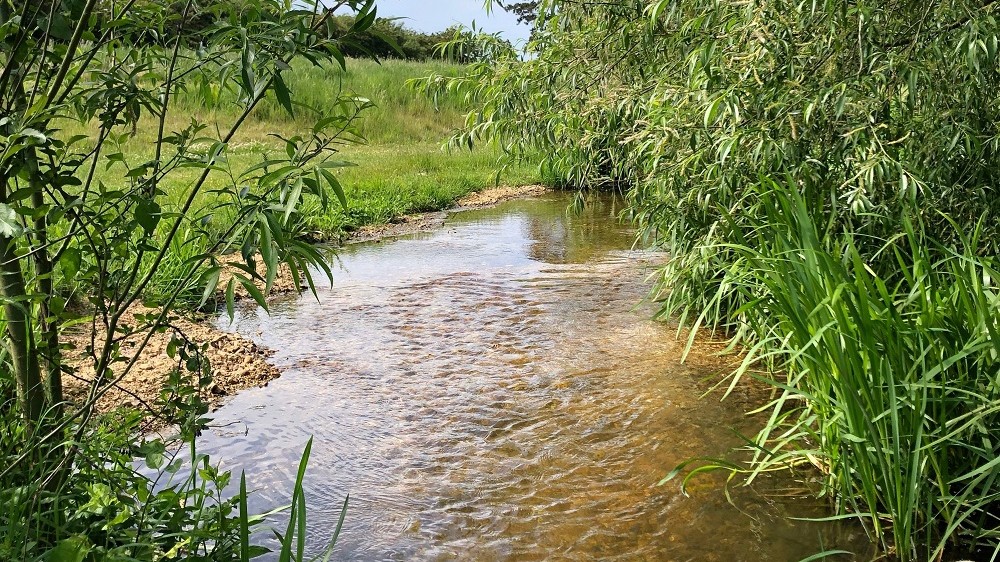
The plan will make sure we balance the needs of our customers with the needs of the environment. For example, we’re reducing the volume of water we take from the chalk stream aquifers to help restore and improve these precious watercourses. This means we need to reduce overall demand for water wherever possible.
We’ll do this through our ambitious demand management plans in areas such as leakage reduction, metering and water efficiency measures.
Where we can’t reduce demand low enough, we’ll need to look at what additional supply options are required to provide the additional water required.
These numbers are forming the basis of our plan and that’s why we’re developing the proposal for a new reservoir. It will help us supply the additional growth planned in our area, as well as allow us to reduce the volume of water we take from the chalk stream aquifers.
Are bills going to increase to pay for the investments needed?
In some areas, we are likely to need to deliver some ambitious and innovative programmes to deliver resilient and sustainable water supplies. This may mean more ambitious demand management approaches, such as leakage, or investment in new supply options, such as new reservoirs.
Much of this investment is funded through customers’ bills. So, these additional needs are likely to mean an increase in bills and these will likely start to happen from 2025 onwards.
Once we have our plan developed further, we will be able to identify the potential impact on bills. We will then share this with customers and other stakeholders to get their feedback. This in turn will determine the scale of some of our ambition and the potential timescales for delivery.
Who will pay for the investments needed in the regional plan?
Any proposed investments will need to go through our business planning process and be approved by Ofwat, the economic regulator of the water companies in England and Wales.
Ofwat’s role is to decide whether our plans are appropriate for the challenges we face and that they provide the best value for our customers.
Demand management options, such as leakage and metering, are funded through customers’ bills.
However, some of the large-scale supply options that may be needed, such as new reservoirs, could be funded through different mechanisms, such as Direct Procurement for Customers (DPC). This is where a third party would finance and carry out the work.
As our plans progress, we’ll test these with some of our customers to outline any impact the proposals would have on bills. We’ll then build the feedback into our plans to ensure they’re acceptable and affordable for our customers.
Will it be harder to achieve with so many organisations involved?
What we have found is that every organisation involved in developing each regional plan is committed to delivering the right solution for that region and the country. It’s true that each organisation has its own specific needs, but there is widespread recognition that the challenges are often the same across each sector, and that we truly need to work together if we’re going to resolve them.
It’s hard to balance all the different needs, and there is more work involved in doing this. But it will absolutely ensure we deliver the best value and most sustainable plan for the region, and the country, as a result.
When will customers start to see the benefits of the regional plan?
The regional plans are focused on 2025 onwards. From that date, action will be taken to deliver environmental improvements and ambitious demand management. Additional supply options will also be developed as required.
Some of these actions will show benefits quicker than others, but the plan will help to resolve both the short-term and long-term challenges we face.
How will you keep customers updated with progress towards targets?
The regional planning teams will continue to review the progress and share this with customers and other stakeholders.
We’re not sure how this will look at this stage, as most of the focus has been on developing the plans. But we’ll soon be turning our attention to the steps we’re going to take once the plans are completed.
In addition, water companies report each year on their progress against their water resources management plans (which will reflect the regional plans), and we share our performance on the website, through our social media and other communication channels.
Our website uses cookies to distinguish you from other users. This helps us to provide you with a good experience when you browse our website and also allows us to make improvements. By continuing to browse the website, you are agreeing to our use of cookies.
These are the cookies required for the operation of our website. They include, for example, cookies that enable you to log into secure areas of our website, making use of e-billing services.
Cookies used
Accepted cookie consent
SurveyMonkey
AuthToken and ASP.Net session
They allow us to recognise and count the number of visitors and to see how visitors move around our website when they are using it. This helps us to improve the way our website works, for example, by ensuring that users are finding what they are looking for easily.
Cookies used
Google Tag Manager
Google Analytics
They are used to recognise you when you return to our website. This enables us to personalise our content for you, greet you by name and remember your preferences (for example, your customer reference number or choice of language).


 Demand for water is increasing