

Two-minute read | Five more surprising facts about chalk streams
Posted: 22 September 2026
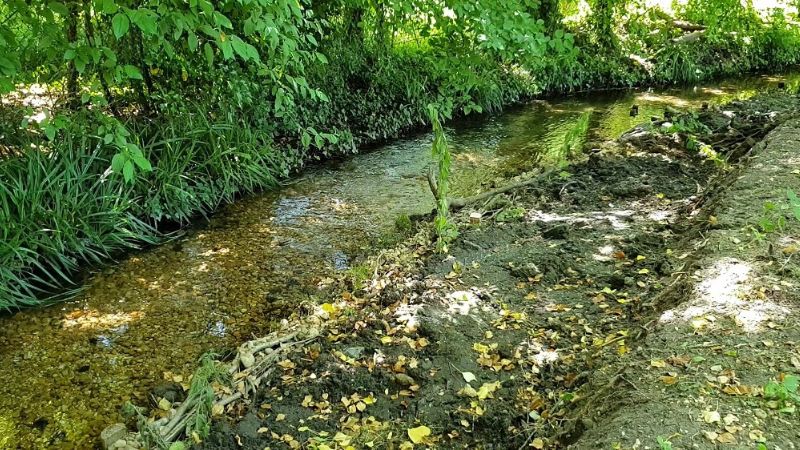
Cambridge sits at the downstream meeting point of multiple chalk streams. Clear water, plant beds and high levels of biodiversity are mostly found upstream on the Granta, west on the Rhee and in smaller tributaries like the Shep and Mel.
This complex system is highly dependent on groundwater balance, making it sensitive to both climate change and water use.
1️⃣Did you know…?
Chalk streams are naturally ‘liquid limestone’ as they carry dissolved calcium carbonate from the chalk aquifer.
2️⃣Did you know…?
Due to the high quality water from the springs, Cambridge chalk streams support luxuriant aquatic plant growth compared to many UK rivers.
Plants such as water crowfoot don’t just live in chalk streams, they actually engineer them. They do this by slowing down the water in summer and increasing flow capacity in winter.
The smaller tributaries like the River Shep and River Mel show this best. In summer, dense water crowfoot beds narrow the channel and speed up flow between them, creating the classic chalk stream pattern of riffles, glides and pools. In winter, when plants die back, the same channel becomes wider and faster flowing.
The Shep is often used as a textbook example of near-natural chalk stream dynamics in Cambridgeshire.
3️⃣Did you know…?
Certain species are almost entirely dependent on chalk streams.
Brown trout can exist in many waterways, but require the high water quality, good oxygenation and clean gravels, such as those that are present in the Granta and upper Cam/Rhee system, to be able to spawn.
Species like white-clawed crayfish and brook lamprey thrive in the clean, stable conditions that chalk streams provide – you may spot these in the Shep or the Mel.
Chalk stream insects, like mayflies and stoneflies/caddisflies, are abundant in cleaner stretches and are good indicators of chalk stream health.
The biodiversity improves quickly as you go upstream out of Cambridge, especially towards rural headwaters.
4️⃣Did you know…?
They can ‘switch off’ in dry periods – but will return.
Winterbourne chalk stream headwaters may dry up in summer if groundwater levels fall. However, they reappear months later when aquifers recharge. This stop-start is completely natural, but it is important to monitor this to ensure there is no environmental damage.
The River Rhee catchment and nearby tributaries include stretches that can behave like this. Some upper channels may have a reduced flow or dry up completely during prolonged dry spells, then re-emerge when groundwater levels recover after wet winters.
5️⃣Did you know…?
Chalk streams are quietly supplying thousands of people with water.
The same aquifers that feed chalk streams are also use for abstracting drinking water. Cambridge is an area that particularly relies on this. We also understand that abstraction reduces flows in some chalk streams, including the Cam and Granta, especially in dry periods.
This is why we undertake a variety of biodiversity projects to protect chalk stream habitats. We also invest heavily in our infrastructure to stop water leaking on our network, replace ageing pipes which could be prone to leaks or bursts, and take steps to decrease the time it takes to reach and repair leaks which are spotted.
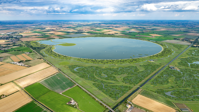
We are also working with Anglian Water on two new vital water sources for the region – the Grafham to Cambridge Pipeline and Fens Reservoir.

When completed, the Grafham to Cambridge Pipeline and Fens Reservoir will supply an additional 126 million litres of water per day.
If you want to know more about these projects, visit our Grafham Water and Fens Reservoir pages 💧