The Challenge
Population growth and climate change
Every day we balance the water available with the water our communities and the environment needs and we have many defences in place to make sure we can keep water flowing. However, during drought conditions, demand can rise dramatically, and the environment can need additional help.
We make sure we do everything we possibly can before asking customers to restrict water usage and understand that customers want to know what we have been doing before introducing temporary water restrictions. The answer is: a lot. Restrictions are never our first step, and we know it can be frustrating to be asked to use less water whilst also seeing issues such as leaks or hearing about future investment plans.
This page sets out the work we have already done, and continue to do to make as much water as possible available, reduce leakage, help customers save water and protect the local environment. Temporary restrictions are one part of a much wider response to prolonged dry weather and high demand
Our defences

Investment in our infrastructure
Investing in our network and future water supplies is one of the most important ways we can reduce the risk of restrictions during long, dry periods. These projects take years to plan and deliver, but they help us build greater resilience for customers, support local growth and make sure we can continue to supply reliable water.
- We are working with Anglian Water on a new reservoir that will help secure long-term water supplies across the east of England, including Cambridge.
- We are planning a new pipeline from Grafham Reservoir to Cambridge, which will bring up to 26 million litres of additional water a day into the area from the early 2030s.
- We are installing smart water meters for all Cambridge customers by 2030, helping households understand their water use, spot possible leaks and reduce water and energy bills.
- We are also replacing business and commercial meters with smart meters by 2030, so we can help organisations identify high water use and leaks more quickly.
- We are continuing to invest in our network and water supplies now, while also planning larger schemes that take many years to design, approve and build.

Finding and fixing leaks
Finding and fixing leaks is one of the most effective ways we can protect water supplies before asking customers to use less. Every litre saved through leakage reduction is water that can stay in the network for homes, businesses and essential services, helping us manage demand during dry weather and reduce pressure on the environment.
- We know seeing water leaking in the street is frustrating, especially when we are asking customers to save water. That is why we have increased the number of teams finding and fixing leaks across our network.
- Dry weather and ground movement can cause new leaks to appear, so our teams are working hard to identify and repair them as quickly as possible.
- In July alone, we found 300 leaks on our network and fixed more than 270.
- Sometimes a leak may run for a few days before it is repaired. This is usually because we prioritise the leaks losing the most water first, or because we need permission from the local council before we can safely dig up the road.

Producing as much water as possible
During hot, dry weather, demand for water increases at the same time as the amount we can safely take from the environment can reduce. That is why we focus on keeping our sources, treatment works and supply network running as efficiently as possible, so we can make the most of the water available before asking customers to make bigger changes.
- We have worked hard to keep all our water sources, treatment sites and supply assets available and running reliably throughout spring and summer, so we can put as much water as possible into supply for customers.
- We are also bringing four older borehole sites back into use. These sites have not been used for more than 20 years because of previous water quality challenges, but improvements in treatment technology mean the water can now be treated to the high standards required for drinking water.
- Once they are in service in 2027, these sites will provide up to 10 million litres of extra water a day during periods of peak demand.

Managing customer demand
Reducing demand is essential because even small changes in how water is used at home, in gardens and by businesses can make a big difference when resources are under pressure. We focus on helping customers save water because it protects supplies for everyone, reduces waste and can also help customers lower their bills.
- We have run award-winning water-saving campaigns, including Can for the Cam, to encourage customers to reduce non-essential water use during dry weather.
- Together, our water-saving campaigns are helping reduce demand across the region by more than 2.3 million litres of water a day.
- We give customers practical support to save water at home, including free and discounted products that are easy to use and can help reduce water and energy bills.
- These include tap aerators, water-efficient shower heads and discounts on products such as water butts. We promote these through our website, social media, customer emails and local advertising so as many customers as possible know what help is available.

Protecting the environment
Protecting the environment is central to how we manage water, especially in an area with rare chalk streams and sensitive habitats. We have to balance the needs of customers today with the long-term health of rivers and aquifers, so we continually review how much water we take and invest in ways to reduce our impact.
- We cannot simply take more water from the environment when demand rises. The amount we take is controlled through environmental permits and legal limits designed to protect rivers, chalk streams and wildlife. These limits are especially important during dry weather, when the environment is already under pressure.
- Since 2015, we have reduced the amount of water we take from the environment by nearly 20 million litres a day. To put that into context, we normally supply around 86 million litres of water a day to customers.
- We are planning to reduce this by a further 65 million litres a day over the next 15 years. This will help protect rare chalk streams and make the local environment more resilient as our climate changes.
- Reducing how much water we take is only one part of the work. We are also investing around £13 million before 2030 to improve chalk streams across our region, helping restore them to a more natural condition and supporting the wildlife that depends on them.
- Cambridge Water is a water-only company, which means we supply clean drinking water but do not treat or discharge sewage. Wastewater services in the Cambridge region are provided by Anglian Water.
All of these actions improve resilience, but can't answer everything during a drought.
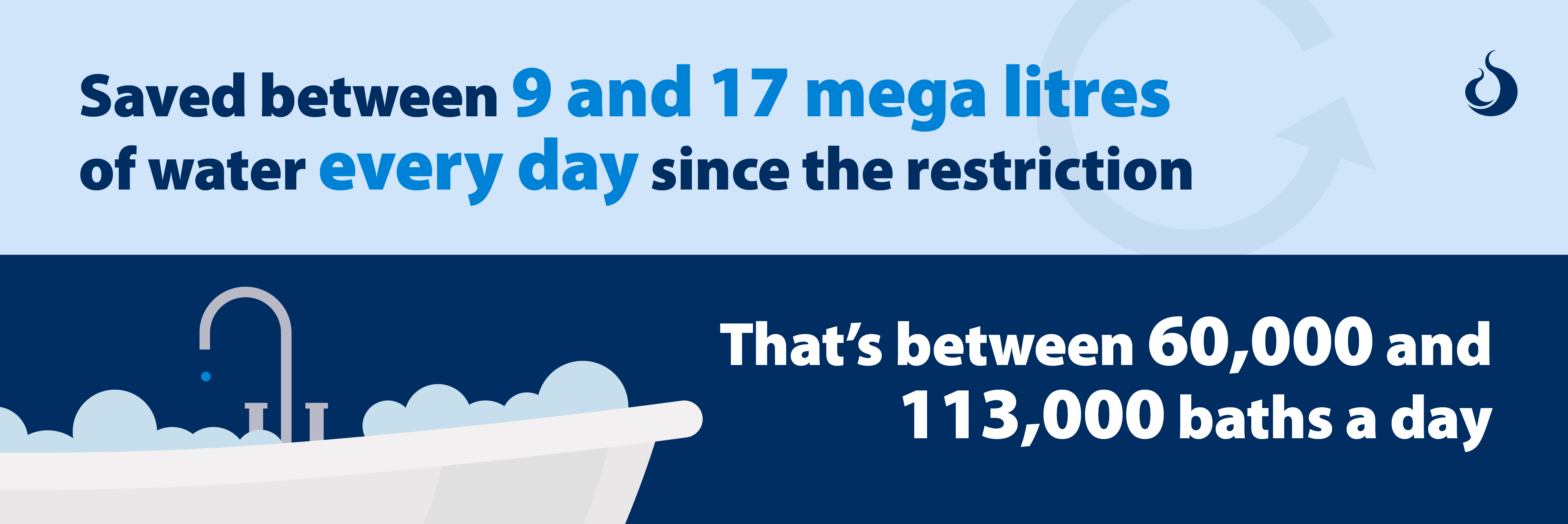
A hosepipe ban is only introduced once many other actions have taken place. It's our final defence for the environment and it has a big impact.
Why restrictions are still needed
All of these measures help protect water supplies, but during prolonged hot, dry weather demand can rise faster than the system and the environment can safely support. At the same time, there are strict limits on how much water we can take from rivers and underground sources. Temporary water restrictions help reduce non-essential use quickly, so we can protect essential supplies for customers and reduce pressure on the local environment while dry conditions continue.
See more information about our Temporary Hosepipe Ban
Discover why the ban is in place, and what you can do to help.