

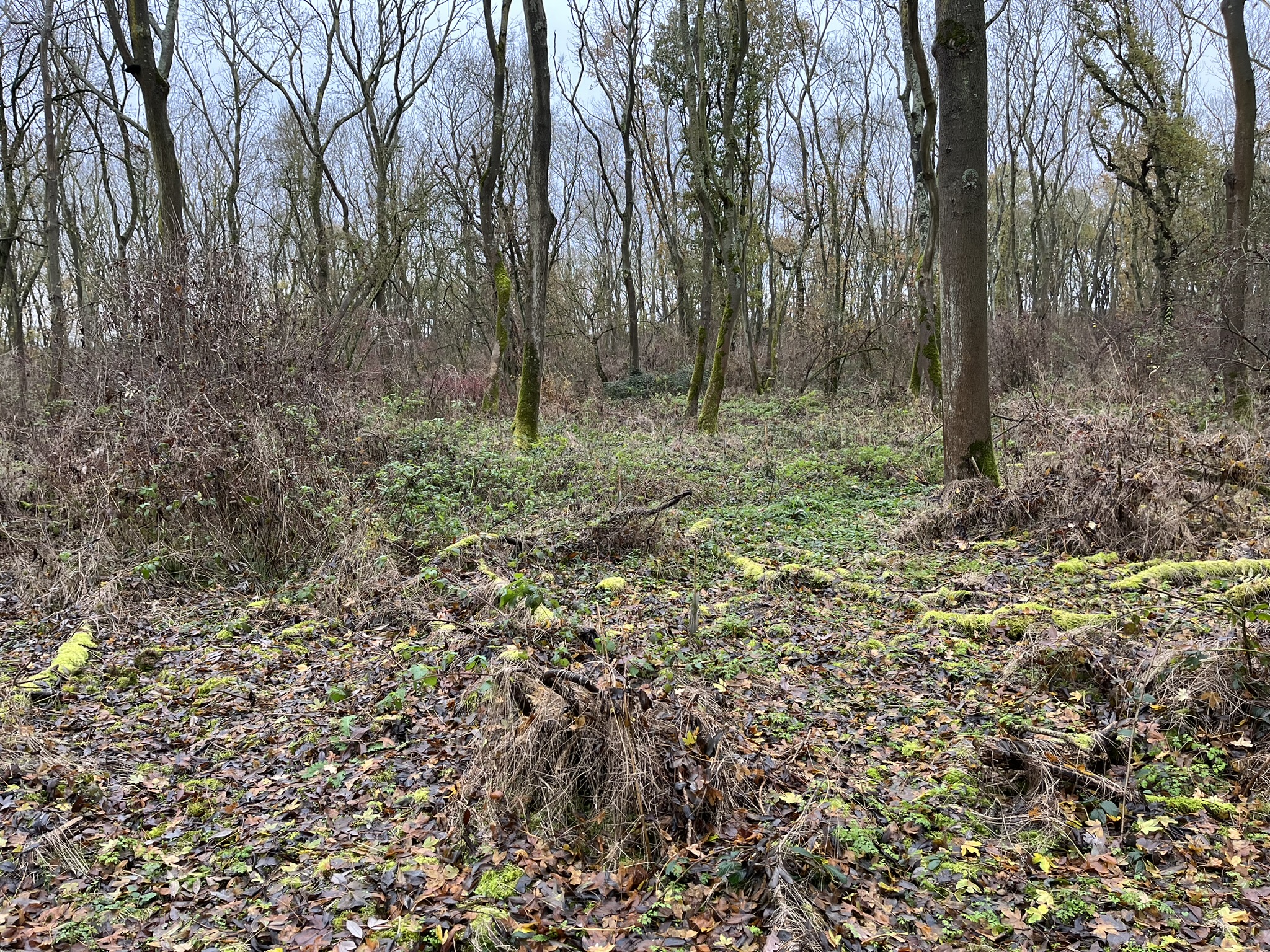
 While natural regeneration will eventually lead to the establishment of new trees, the Trust wanted to accelerate this process by planting native species, increasing the diversity of the woodland and helping to improve its resilience to a warmer future climate.
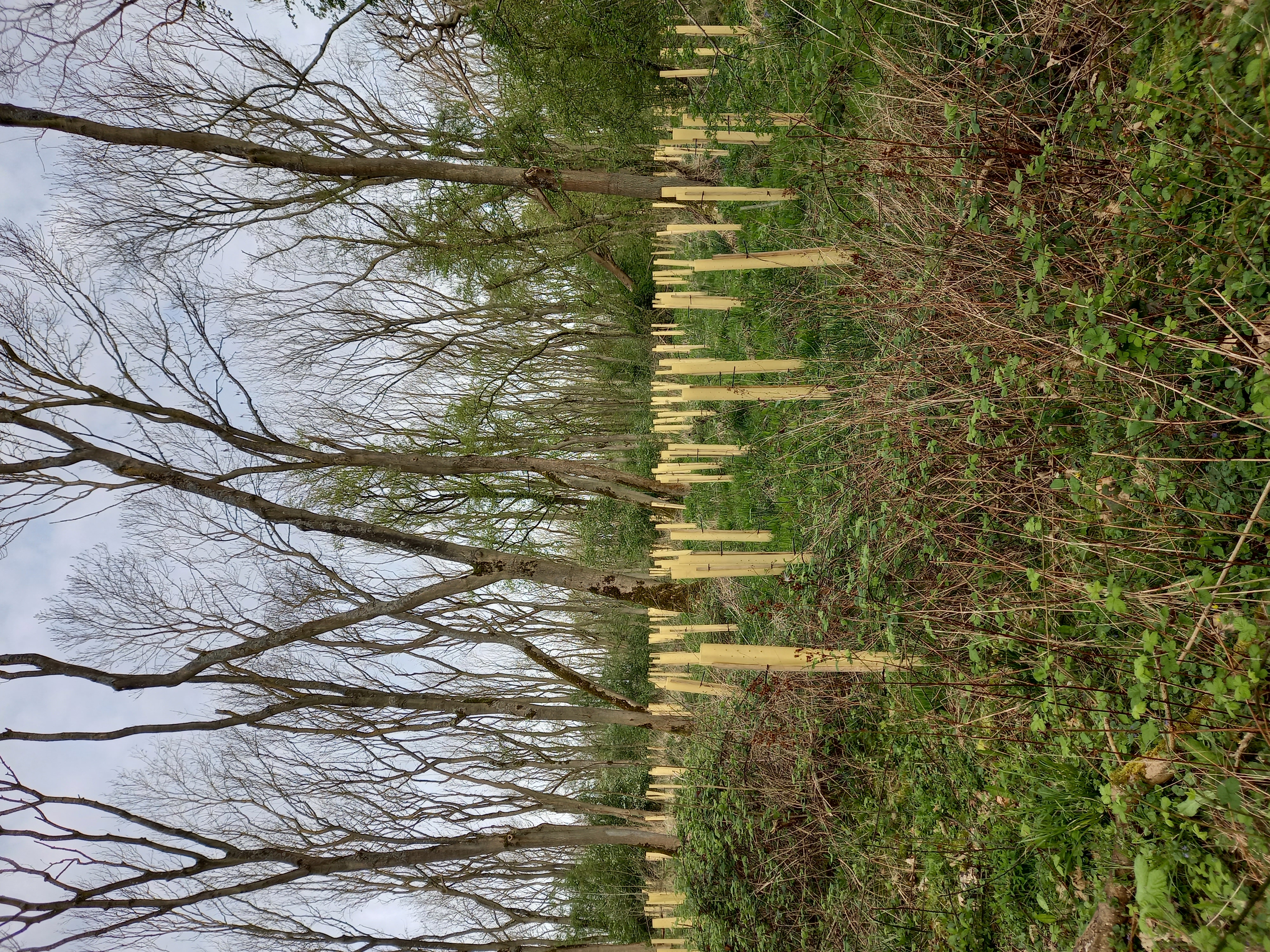 In addition to the planting works, the Trust carried out a range of habitat restoration activities, including the repollarding* of a veteran oak tree and the clearance and pollarding* of several surrounding ash trees.
The Trust also treated 34 tree stumps with an experimental sheep fat deer repellent to protect regenerating growth from deer browsing and encourage coppice regeneration.
The completed works have helped to enhance biodiversity, strengthen natural habitats and support woodland regeneration, helping to ensure that Wistow Wood can be enjoyed by both wildlife and future generations for years to come.
*Pollarding is a pruning method that cuts back a tree's upper branches and stem to a main trunk or knuckle high above the ground. Repollarding is a specialised tree pruning technique that involves removing the upper branches of a previously pollarded tree.